News
Why I’m Painting Nocturnes of Familiar Yorkshire Places
In the first of my series “A note from the studio”, I share why I’m painting nocturnes of familiar Yorkshire places; exploring how darkness, weather and memory transform village lanes, woodland edges and lit windows into atmospheric, emotionally charged paintings. The post introduces my new Yorkshire nocturne series, including Where the Light Waits, and reflects on painting place, threshold and...
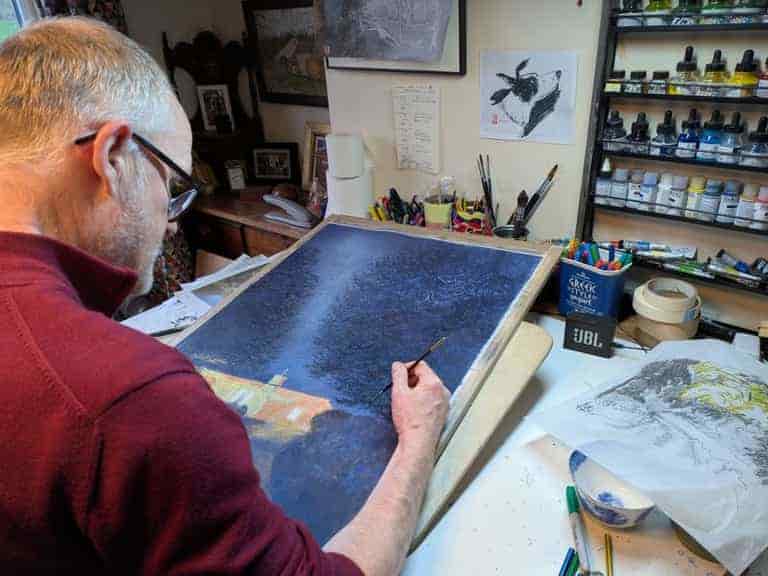
By Matthew Eyles|Artist
Sun, Mar 22, 2026|Edited: Wed, Mar 25, 2026
A note from the studio
Lately I’ve been working on a new series of nocturnes: night paintings based on familiar viewpoints around the village near my studio. What interests me in these works is how places shift after dark, when artificial light, memory and atmosphere begin to matter more than literal description. The familiar becomes less fixed, and the boundaries between dwelling, landscape and imagination begin to loosen.
This new body of work is growing out of subjects I know well: village lanes, edges of woodland, lights glimpsed through darkness; but I’m finding that night transforms them into something less certain and, in some cases, more emotionally charged. A place that can feel entirely ordinary in daylight may take on a very different presence once darkness falls.
Darkness is not the only thing that blurs the edges of perceived reality. Weather can do the same. I’ve also been exploring this through a series of sketches based on a rain-soaked autumn scene near the studio, where reflections, wind and rain alter the mood and character of an otherwise simple rural road.
A recent visit to East Riddlesden Hall also gave me plenty to think about, particularly in relation to thresholds — windows, doorways, gateways and the subtle transitions between inside and outside that can hold such strong painting potential.
The new nocturne series: something of the night
I’m currently working on sketches for three new paintings in this series, with the working titles Distortions of the Night, Christmas Lights, and Into the Woods by Torchlight. I have also just completed the first finished work in the group, Where the Light Waits.
These paintings are rooted in familiar places, but they are not intended simply as descriptive views. What interests me more is the way darkness changes how a place is experienced. At night, detail recedes, forms simplify, and certain elements begin to take on greater weight: a lit window, a patch of reflected light, the edge of a tree line, or the uncertain space beyond a pool of illumination.
In these pictures I’m trying to explore that shift, the point at which a known place begins to feel slightly other. Night seems to allow atmosphere and memory to move to the foreground. A lane, a house, or the edge of a wood can feel less anchored to fact and more open to suggestion. There is the beginning, perhaps, of a larger body of work here; something of the night, and of how familiar places become quietly altered after dark.
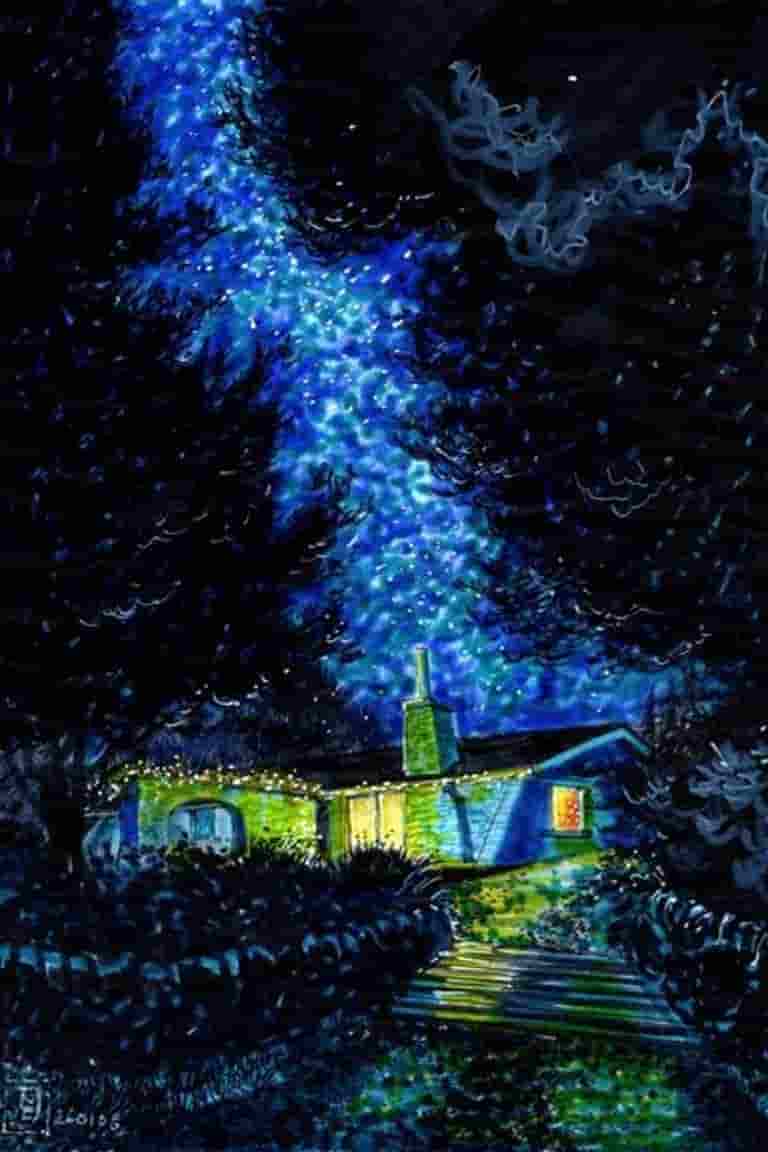
An early sketch for "Christmas Lights".
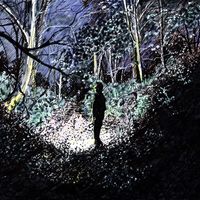
First sketch for “Into the Woods by Torchlight”
Subscribers to my newsletter will also get an early glimpse of Christmas Lights as it develops, before the painting is shared more widely.
Where the Light Waits
The first completed painting in the series is Where the Light Waits, which is now available to view on my website.
This painting is set at the edge of a Yorkshire village, where woods and dwelling meet. It explores a point of tension that has long interested me in painting: the meeting of habitation and darkness, certainty and ambiguity, welcome and unease. The light within the trees remains steady and contained, but its meaning is left open. It may suggest warmth, refuge or return or simply a small act of defiance against the dark.
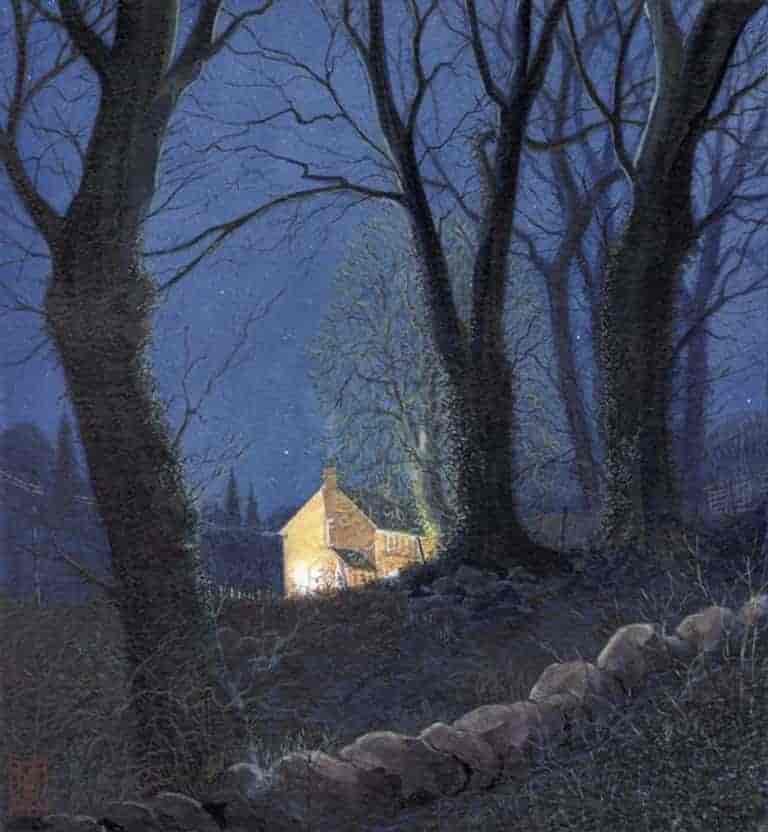
"Where the Light Waits"
At the edge of a Yorkshire village, where woods and dwelling meet, winter night blurs what the day defines. Boundaries loosen; the familiar shifts toward something less certain, something other. Within the trees, a light remains - steady, contained. A welcome, perhaps, or simply a small defiance against the dark?
What matters to me here is not simply the image of a lit place at night, but the emotional charge that such a moment can hold. A small light can become an anchor, a question, or a point of narrative tension.
Related work:
You can explore the wider Nocturnes section on my website, including Where the Light Waits and other paintings in this part of my practice.
Why I’m drawn to familiar places after dark
One of the things that interests me most in painting is how familiar environments can become subtly altered under changing conditions. Night is especially powerful in this respect. The ordinary structures of a place remain, but their meaning begins to shift.
In daylight, we often read a scene quickly. We understand its forms, functions and boundaries almost at once. At night, that certainty becomes less reliable. A building recedes into shadow. A road reflects light differently. Trees become a mass rather than a collection of branches. A single illuminated element can dominate the whole composition.
This transformation interests me both visually and emotionally. I’m not trying to make these works dramatic for the sake of it. What I’m looking for is something quieter: the way darkness can thicken atmosphere, intensify memory, and allow a place to feel less fixed and more suggestive.
A visit to East Riddlesden Hall
A recent visit to East Riddlesden Hall near Keighley also fed directly into this way of thinking. It is a fascinating place; a small 17th-century National Trust property that feels like an oasis on the edge of a dense urban area.
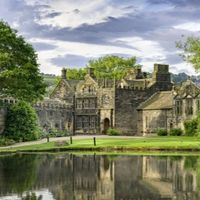
East Riddlesden Hall - image courtesy of The National Trust
What struck me most on visiting was the richness of its threshold spaces. There were views through gateways, doorways and windows; enclosed courtyards; and subtle transitions between interior and exterior spaces. It felt full of painting potential, particularly for someone like me who is interested in architecture, atmosphere and the way spaces are experienced rather than simply described.
I found myself imagining a possible series of small paintings exploring these transitions: perhaps paired views of the same place from inside and outside, or interior scenes shaped by window light. There is something about the hall that feels especially suited to this kind of work — its age, its intimacy, and the relationship between its architecture and surrounding landscape.
The visit also reinforced something I return to often in painting: that places become most compelling when they are not entirely one thing or another. A doorway, a window, a courtyard edge, the meeting of building and garden — these are often the spaces where atmosphere gathers.
From the sketchbook: rain on a Yorkshire road
Alongside the nocturnes, I’m also working on a series of sketches based on a simple stretch of road just up from the studio. On one level, it is a fairly ordinary rural scene. But in heavy rain at the start of autumn it becomes something quite different.
The wet road catches light in unexpected ways. The trees are only just beginning to turn. The overcast weather flattens some contrasts while deepening others. The whole view takes on a particular mood; subdued, reflective, and slightly melancholic.
What I’m exploring in these sketches is how weather can elevate an otherwise nondescript place, and how painting might suggest movement, sound and atmosphere within a static image. The rain on the road creates reflections that shift the composition, while the wind in the trees and the steady fall of rain alter the emotional tone of the scene.
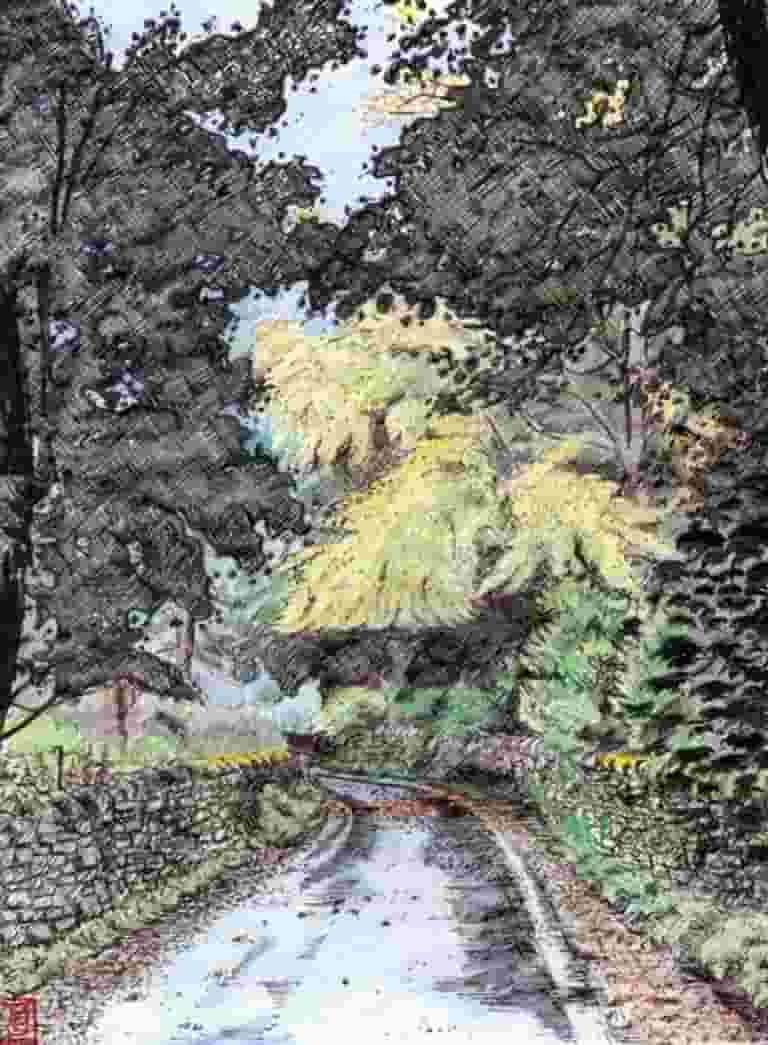
An early exploratory sketch
I’m intrigued by how rarely rain seems to appear in art in a sustained way. One notable recent example for me was one of David Hockney’s iPad drawings from his Arrival of Spring in Normandy exhibition. Rain seems surprisingly difficult to depict without becoming merely illustrative, but I’m interested in whether painting can evoke it more through mood, surface and rhythm than through direct description.
What I’m exploring in these recent works
Across these different strands of work - the nocturnes, the threshold spaces, the rainy road studies — there is a common thread. I’m interested in how place becomes emotionally charged when conditions change: when daylight fades, weather thickens, or architecture frames a particular transition.
Again and again I find myself returning to:
- the meeting of building and landscape
- the shift from inside to outside
- ordinary views altered by light or weather
- the tension between what is clearly seen and what is only suggested
These are the moments that seem to hold the strongest painting potential for me.
Current news from the studio
A few pieces of recent news:
Leeds Gothic – the Corner Shop
My painting Leeds Gothic – the Corner Shop has just returned to the studio after being included in the Yorkshire Artists Winter Show at Saltaire Art Gallery. It will shortly be on display at Look Gallery in Helmsley.
Commission availability
I still have a small number of commission slots available for the second quarter of 2026. If you have a building, house, landscape or place of personal significance that you would like to discuss as a possible painting, you are very welcome to get in touch.
An invitation from the studio
I’m interested this month in other people’s experience of night-time places.
Is there a night-time view — rural, urban, domestic or otherwise — that you think would make a compelling painting? It might be a lane, a shopfront, a row of houses, a village street, or simply a place where light changes everything after dark.
I invite you to send me a photograph of a view, together with a brief note about where it is and why it matters to you. I’ll choose one as the starting point for a future painting, and the selected reader will receive an artist’s proof print when the work is complete.
If that sounds of interest, you can send me an email with a photograph of your selected view to: hello@mattheweyles.art
Further links
You may also like to explore:
Closing note
Thank you for reading. These studio notes are a way for me to share not only finished work, but also the ideas, places and questions that sit behind it. If something here has resonated with you; whether it’s the nocturnes, the rainy road studies, or the threshold spaces of East Riddlesden Hall, I’d be very pleased to hear from you.